How Treating Aortic Stenosis Improves Breathlessness and Fatigue
Key Pointers
- TAVR (Transcatheter Aortic Valve Replacement) treats severe aortic stenosis, a condition where the heart’s aortic valve becomes narrowed.
- Aortic stenosis can lead to breathlessness, fatigue, and reduced exercise tolerance, especially in older adults.
- TAVR replaces the diseased valve without the need for open-heart surgery.
- Patients often experience improved breathing, energy levels, and quality of life after recovery.
- The procedure is recommended for suitable patients after thorough evaluation by a cardiologist and heart team.
What Is Aortic Stenosis and Why Does It Cause Symptoms?
The aortic valve regulates blood flow from the heart to the rest of the body. Over time, calcium may build up on the valve leaflets, causing them to stiffen and narrow, a condition called aortic stenosis.
When this happens, the heart must work harder to pump blood through the tight valve opening. As the strain increases, symptoms such as:
- Shortness of breath (especially during activity)
- Fatigue or weakness
- Chest discomfort
- Dizziness or fainting
begin to develop. These symptoms are signs that the heart is struggling to keep up with the body’s needs.
How Does Aortic Stenosis Relate to Heart Failure?
Untreated aortic stenosis can eventually lead to heart failure. The heart muscle thickens and weakens from prolonged pressure, reducing its ability to pump effectively.
Many patients with severe aortic stenosis are first diagnosed when they present with heart failure symptoms, including:
- Swelling of the legs or ankles
- Persistent fatigue
- Difficulty breathing when lying flat
- Episodes of chest pain or palpitations
In these cases, correcting the valve problem is crucial to prevent further deterioration.
What Is TAVR and How Does It Work?
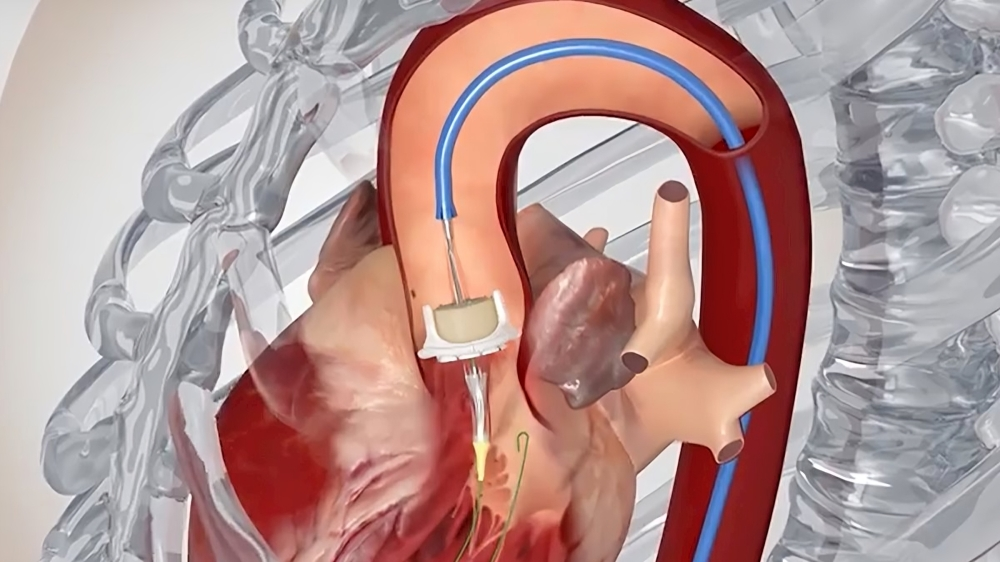
Transcatheter Aortic Valve Replacement (TAVR) is a minimally invasive procedure used to replace a narrowed aortic valve.
Instead of opening the chest, the cardiologist inserts a thin tube (catheter), usually through an artery in the leg, and guides it to the heart. A new artificial valve is then placed inside the old one and expanded, allowing normal blood flow to resume.
Because it avoids the need for large incisions or stopping the heart, TAVR is often considered for:
- Older adults who are at higher surgical risk, or
- Patients whose anatomy allows for a catheter-based approach.
How Can TAVR Improve Heart Failure Symptoms?
By replacing the diseased valve, TAVR immediately reduces the workload on the heart. This allows blood to flow freely and oxygen to reach the body more efficiently.
Most patients notice improvement in:
- Breathing: less shortness of breath during daily activities.
- Energy levels: reduced fatigue and improved stamina.
- Quality of life: better ability to walk, climb stairs, or engage in mild exercise.
It is important to remember that TAVR does not cure all causes of heart failure, but it addresses the valve-related component that contributes to breathlessness and weakness.
What to Expect After TAVR
After the procedure, most patients spend a short time in the hospital for monitoring. Recovery is typically faster than open-heart surgery, though some fatigue and mild discomfort are expected initially.
Follow-up visits with the cardiologist ensure the new valve is functioning well and that any residual heart failure symptoms are optimally managed.
Frequently Asked Questions
1. Can TAVR completely cure heart failure?
Not always. TAVR helps when heart failure is caused by aortic stenosis. Other underlying conditions may still need ongoing management.
2. How long does a TAVR valve last?
Current studies show that TAVR valves can last many years, though long-term durability continues to be evaluated.
3. Who is eligible for TAVR?
Suitability depends on age, overall health, and valve anatomy. A cardiologist and heart team will assess each case individually.
4. Is TAVR safe?
TAVR is generally considered safe in experienced centres. As with any procedure, risks exist and should be discussed with your doctor.
5. How soon will symptoms improve?
Many patients notice better breathing and energy within weeks, though full recovery may take several months depending on overall health.
Breathe Easier With Heart Specialist Valve Care
If you’ve been diagnosed with aortic stenosis or have heart failure symptoms such as breathlessness or fatigue, timely evaluation can make a significant difference. TAVR may be an option for suitable patients seeking relief from valve-related heart strain.
At Heart Specialist International, our cardiology team provides comprehensive evaluation and management for aortic valve disease, including TAVR, coronary angioplasty, and other interventional procedures.
- +65 6962 1287
- Mount Elizabeth Novena Specialist Centre, 38 Irrawaddy Road #07-41, Singapore 329563
- Book an Appointment